Cultural Differences and Boundaries (con Traducción)
Last year in December, my brother and I were visiting a sister from church who was in the hospital. When we go on our nature walks in the middle of nowhere, it is my older brother who takes the lead, leaving me way behind! Even with years of practicing long strides, my shorter legs cannot catch up to his fast and determined pace. Even when we he has guests, he goes off as if on a mission, leaving us behind.El año pasado en diciembre, mi hermano y yo fuimos a visitar a una hermana de la iglesia en el hospital. Usualmente cuando andamos caminando en medio de la naturaleza, es mi hermano mayor quien siempre está al frente, no falta que nos deje atrás a los demás. Aun con los años que tengo de practicar caminar con pasos largos, mis piernas más cortas no logran alcanzarlo. Aun cuando tenemos visita, el se va solo al frente como un soldado en una misión, dejándonos todos atrás, luchando para alcanzarlo.
But when it comes to dealing with people, social skills and society, he tends to hang back. It usually doesn't bother me, unless I am unsettled...like that day we went to the hospital.
Pero cuando se trata de gente, habilidades sociales, y la sociedad, el tiende a quedarse atrás. Normalmente, no me molesta, al menos que este incomoda…como aquel día que fuimos al hospital…
We knew there was not much we could do for our sister in Christ except offer our prayers that God might intervene in her illness, keep her and her loved ones company, and offer them some nourishment.
Conociamos que no habia mucho que podíamos hacer por esta hermana que estaba grave de salud, pero si podíamos ofrecer nuestras oraciones que Dios interviniera en su enfermedad, darle a ella y a su familia compañía y ofrecerles algo de alimento.
I bullied my older brother to take us there. No, not really...but as he is the only one who drives, I strongly urged him to take us. My mother had prepared some fruit for us to take before she left for work. As soon as I brewed some coffee when I returned from work, we were off! Everyone had their assigned position. My brother was the chauffer, I was his co-pilot with the map and my younger brother was the caddy in the backseat, carrying the elixir of life-COFFEE!
Le hice bullí a mi hermano mayor que nos llevara con ella. No en verdad…pero como él es el único que conduce de los dos, le urgí fuertemente que nos llevara. Mi mama había preparado fruta picada antes de partir a su trabajo. En cuanto regrese del trabajo, había preparado un café para llevar y partimos para el hospital. Mi hermano mayor era el chofer, yo la copilota con el mapa, y mi hermano pequeño era el caddie en el asiento de atrás con el elixir de la vida—Café!
That hospital floor was a large maze with hallways inside of greater hallways and rooms within rooms! However were we to find our sister's room? The doorways that seemed to lead to the inner sanctum appeared to need some secret code. . .Or we could have simply pressed a button...but there is something about talking to an unknown voice through such devices that is terrifying to both of us (Now some of you may know why we don't answer our phones very often if we don't recognize the area code...sorry? =])
¡Ese piso en el hospital era un laberinto grande con pasillos dentro de unos pasillos aún más grande y con cuartos dentro de otros cuartos! ...seguiré la traducción más tarde.
Just then, on the other side of the wall to the left, another pair of doors were opening slowly. A blonde nurse was walking inside...we both felt trepidation. should we? shouldn't we? my feet itched as if ready to bound towards what might be our only chance.
In a split second. . .we halted when we found ourselves before those doors as they completely opened and watched dumbly as they began their snaillike return to their closed position.
Armed with my army green backpack, I held the fruit container up in the air with my left hand like a waitress. One of us whispered out loud, 'Are we supposed to be here?' Where had that nurse disappeared to? We found ourselves stuck between closed doors in front and behind us now. How would we get out? How would we get through? Every door had a code pad and the same button to communicate with someone from the 'inside'.
"I don't think we are supposed to be here..."One of us voiced. The hesitation voiced my own thoughts. A familiar blonde woman in white seemed to appear from nowhere. She seemed to camouflage with her blank surroundings and both parties moved towards each other within the never ending maze of white walls and doorways.
"Could you please tell us where station ### is?"
"Oh, it should be in through those doors." she pointed towards the doors we had just abandoned, confused...Yes...but how do we get through? I mentally said through my teeth.
She disappeared as soon as she appeared before us, blending into the surrounding sterile whiteness.
We went around through the hallway that wrapped around a boxlike room in the center. Somewhere inside that box, were many other rooms. Somewhere inside was our sister in Christ. It seemed impenetrable.
Finally, we came upon an open nurse station. Again we halted. . .in trepidation. No one moved. the nurses and a couple of doctors were consulting one another, behind the front desk or busy looking at the information on their clipboards. Neither one of us was too eager to ask for help. I already did it the first time. I was kind of hoping my older brother would step up this time. After giving him what I thought was enough time to decide. Nothing.
Just then, the closest doctor who had been reviewing his clipboard looked up. I imagine anyone could tell from our faces that we were in need of help. Had it been our eyes that betrayed how trapped we felt? Was it our stiff posture or our rigidness as we walked towards him to close the gap? I was worried he might tell us we were not supposed to be there. That would be embarrassing. Pride...ya' know? so hard to get rid of. Quite an inconvenience at times like these.
"Hello, can I help you?"
I no longer lifted the fruit nonchalantly in the air, trying to act cool. I clutched it with both hands in front of me. As the doctor approached closer to us, I halted, as did my two brothers behind me. He stopped at a distance too close for comfort. I sidestepped to the left while I turned to my older brother as if to say, Okay, your turn, talk....talk.......Talk!
Nothing...
I internally sighed. It wasn't really a long time, but in times like these, it feels endless. Maybe he would have. . . eventually. But since the doctor addressed me, I took the reigns and began answer and tell him of our predicament...he came closer.
I clutched the fruit closer, using it to create a makeshift shield between us, addressing both him and my brother for confirmation of what I had just said... It was actually a tactic to give him an opportunity to jump in and take over the conversation. He still said nothing Uii! Pa' que te traigo entonces? ash, I guess I wouldn't have minded if I hadn't been made uncomfortable. But this guy [i.e. doctor] didn't know that he was standing too close for comfort and my brother was just standing there. . .there. Ahhh! And to make it worse, I didn't give the right name which our sister used when hospitalized.
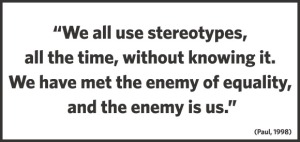
All the while we spoke my thoughts were somewhere else. I studied him. He looked Anglo-white. Not too tall. He passed me, but not by much. I looked at him straight into his eyes acting like nothing was bothering me, but rationalizing inside...He looks white, why is he standing too close? I thought this was something only Latinos/Hispanics did. He talks like an 'American', not an immigrant, so what is he doing? White people don't invade personal space...so why is he invading my bubble?!!
Then I realized I was still looking straight at him and he was still standing too close. I tried to subtly back away a bit, but he stepped forward, not so subtly. Ahh! It was getting harder to keep my cool.
"Aha, I see." I replied distractedly. In the mean time I was trying to find a way to cut the conversation quick and . . . get away!!!!
If you stay here any longer you are going to get red, then that will really get embarrassing! my subconscious was telling me. I was already feeling that faint chill that comes right before my face decides to betray me and turn colorful.
"She is supposed to be in this room number." I said finally.
"Oh, that will be right through here." he finally turned around away from me and began to step away as he led us there, stopping to as were about to go through.
"Ok, thank you very much!" I answered quickly and swiftly sped through without daring to turn and check on my brothers. The tension left immediately. In just a moment I was already thinking about how I would make my brother pay....just you wait till we get home. I was sorely tempted to have it out there as soon as the ghostly white doors closed silently behind us. But thankfully, I remembered that we were there for a higher purpose and my next attack would have to wait.
Adjusting the straps of my army-green canvas pack, I lifted the fruit up in the air once again as we made our way towards our sister's room, my two brother's trailing behind. Not such a fast walker now, huh?
I know, I know. I am not proud of my thoughts. I am not perfect, but when I share something with all of you, I prefer to be as truthful as I can be without being biased. I can only say I am human and sometimes, revenge (as the one I was mentally planning for my brother) can feel so. . . lovely...I know I know! How wicked of me.
But if you really want to help, I beg you will offer your prayers to our Heavenly Father to be faithful with me and finish His work in my life. Only He can make a lasting change on my heart.
Thank you for reading and your support.
FYI, I didn't really have revenge for those of you who worried. It was about a week after that I just told him, "I can't believe you did that to me!" Not so bad right? Someone must have been praying for me =)
I will be adding my brother's POV soon. He offered to write his side of the story. I hope you will all enjoy it!
A Matter of Control?
My sister and I walked the halls of the hospital searching for our sister-in-Christ whom was in critical condition. As we roam, I notice that she was leading. I was not anxious to take the lead or make any effort to do so since that would imply that I would have to ask for directions from the medical staff. I’ve had negative experiences in the past with these people who go about their responsibilities as if we are intruding on their sacred ground of jurisdiction. Besides, my sister loves to be in control so, I thought I let her deal with it.As we walked passed a set of doors we entered unsure of ourselves and our surroundings. We spot three men talking by a desk and I thought them to be doctors because they wore lab coats versus scrubs. One of the younger of the three must have noticed that we needed a sense of direction because he started to walk up to us.
Ah here it comes I thought to myself, so smug because I did not have to deal with talking to him. Since my sister was leading us I knew she was going to be the one that the doctor was naturally going to confront.
Did I mention that there was a change of pace? Yes, it seemed as if we walked slower into that corridor. I wondered if my sister did that on purpose as a cue for me to move up.
I was resolute, must keep present formation! Steady, easy, Here we go! Woa! That’s too close. The doctor stood before my sister; his gaze was so intense as if to say I’m here for you how can I help.
As he walked up I thought, Ah! he seems friendly. Now he stood barely a foot away from her face. I was like, Awkwarrrd, Ok I we see your lab coat and stethoscope; your place of authority has been established no need to push it!
I was just right behind my sister, so I already had her as a barrier, even so, I was beginning to feel intimidated. That’s when I decided the force is strong with this one, I took a step back, retreat!
This was so cool! Would my sister take step back? I knew she could feel it. The young doctor had stepped so close to her that she was forced to look up at him at a steep angle. She didn’t back down.
I’m here for you sister! Well a step away anyway. Hold your line! It was so amazing! I was witnessing a type of psychological warfare at its best. Here was a frontal assault from a medical professional, marking his turf and even the slightest movement of a backward half step would show deference. I knew this was what he wanted, but Ha! He doesn’t know who he’s dealing with! Still, was it too much for my sister? Would she stand strong or fold? Who would seem to have better control of the situation?
We walked out that battlefield with our dignity! After we received his advice my sister thanked him politely and we turned to walk away.
The pace was respectable and not cowardly. My brother and I closed in behind her giving the MD a great view of our backs and reinforcing an illusion that my sister occupied the top tier of authority in our circle. We were three siblings and they were three doctors. Both groups had someone who was conscious of their portrayed self-image.